There are a few candidates for the “real” King Arthur, and I recently discovered that my ancestor, Athrwys ap Meurig, is one of them.
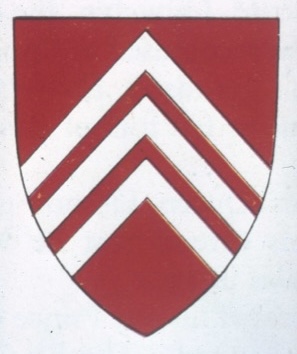
I’m related to Athrwys ap Meurig through my 7th great-grandmother, Mary Evans of Neath, the heiress who claimed descent from Iestyn ap Gwrgant, the last prince of Glamorgan. The claim can be taken seriously, since her heraldic arms are the same, or are at least attributed to him. Mary married Sir Humphrey Mackworth in 1686 (we pre-date William Mackworth’s adoption of the name “Praed” to form “Mackworth-Praed” in 1733, here), and this is likely when the Mackworth-Praed family adopted the motto “Gwell angau na chywilydd”. The English translation is “Death before dishonour”, which is somewhat ironic—Sir Humphrey Mackworth was in 1710 himself accused of fraud, though no charges were actually brought against him.
Iestyn ap Gwrgant (1014–1093) was the last ruler of the royal house of Morgannwg, which had a lineage stretching back to Tewdrig (c.500-520). I knew this from previous research into the Mackworth-Praed family tree; I also knew that the royal house of Morgannwg were descendants of the celebrated Rhodri Mawr. What I didn’t know was that Tewdrig’s grandson was Athrwys ap Meurig (c. 605–655), a figure I admit I’d never heard of until I stumbled across the name a few days ago.
Athrwys was a prince (and possible king) of Glywysing, Gwent and Ergyng. One doesn’t have to go into the details to be compelled by his possible connection to King Arthur—for me, it’s in the names. There’s Caradoc Vreichvras (King Caradoc is a knight of the round table), Athrwys’ son Morgan ap Athrwys (Morgan Mwynfawr, or “Morgan the Generous”—his name to me sounds very like “Morgana” or “Mordred”), and some have even claimed Meurig ap Tewdrig (Athrwys’ father) used the name “Uther Pendragon”, which translates as “fearsome chief warrior”. Though it’s all a little more complicated than that, and there’s some debate as to which century Athrwys actually lived in, I think it’s pretty amazing that Athrwys (and perhaps his nearest relations) could have been the truth behind the Arthurian legends.
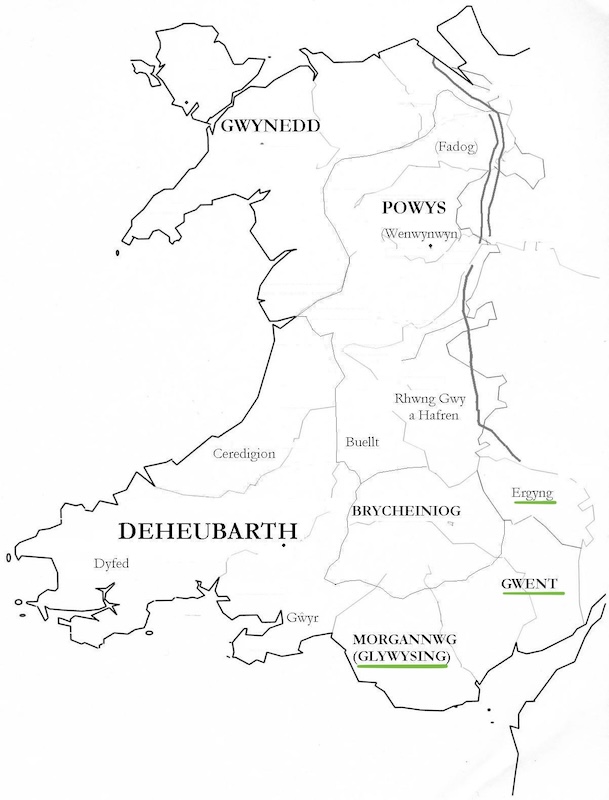
The kingdoms of Morgannwg, Gwent and Glywysing included land as far west as the River Loughor (or possibly the River Neath, which would link back to Mary Evans of Neath), and also encompassed land beyond the River Wye into the old Kingdom of Ergyng, south Herefordshire.
Though scholars agree that the name Athrwys comes from the archaic Old Welsh Antrēs, not Arthur; I feel use of the name “Arthur” for the legend could have evolved because of it’s similarity to Athrwys.
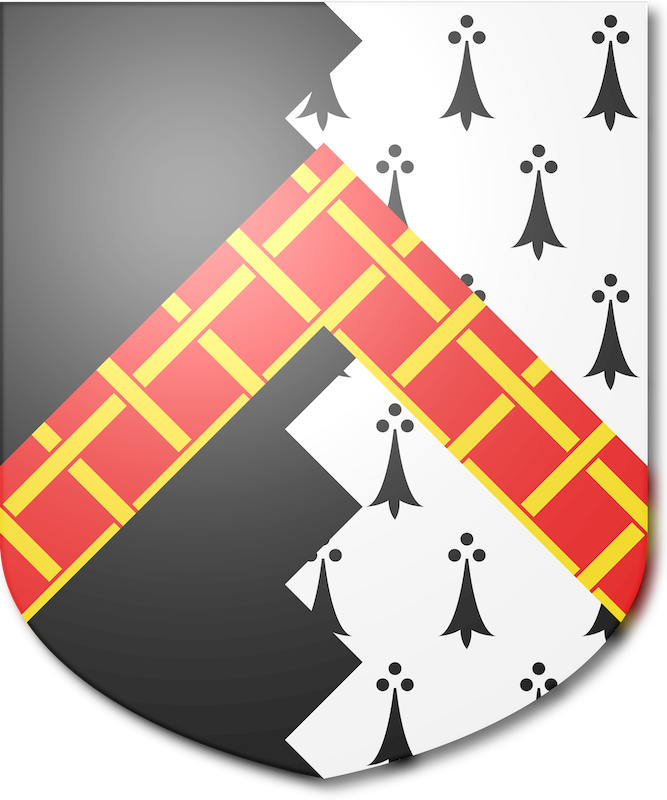
The Mackworth-Praeds have a very accessible family history. Composed mostly of lawyers, bankers, landowners and Members of Parliament (and my great-great-great-granduncle, the poet Winthrop Mackworth-Praed), there is a good public record, which can be traced back to Thomas Mackworth who, in 1404, received a grant of arms incorporating elements from the Audley and Touchet coat of arms in recognition of his (and his brother’s) valiant service to the Audley family; specifically at the Battle of Poitiers.
The link to Athrwys ap Meurig may not hold any real significance; after all, that far back everyone alive in 600 AD with a living descendant today is technically part of your ancestral tree. But perhaps it in part explains my attraction to the legends. At the very least, it gives me an excuse to write yet another Arthurian novel in the future, perhaps even one that centres around Athrwys ap Meurig himself.
 M. L. Mackworth-Praed