Athrwys ap Meurig – the “real” King Arthur

There are a few candidates for the “real” King Arthur, and I recently discovered that my ancestor, Athrwys ap Meurig, is one of them.
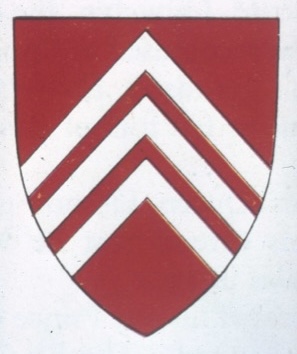
I’m related to Athrwys ap Meurig through my 7th great-grandmother, Mary Evans of Neath, the heiress who claimed descent from Iestyn ap Gwrgant, the last prince of Glamorgan. The claim can be taken seriously, since her heraldic arms are the same, or are at least attributed to him. Mary married Sir Humphrey Mackworth in 1686 (we pre-date William Mackworth’s adoption of the name “Praed” to form “Mackworth-Praed” in 1733, here), and this is likely when the Mackworth-Praed family adopted the motto “Gwell angau na chywilydd”. The English translation is “Death before dishonour”, which is somewhat ironic—Sir Humphrey Mackworth was in 1710 himself accused of fraud, though no charges were actually brought against him.

Iestyn ap Gwrgant (1014–1093) was the last ruler of the royal house of Morgannwg, which had a lineage stretching back to Tewdrig (c.500-520). I knew this from previous research into the Mackworth-Praed family tree; I also knew that the royal house of Morgannwg were descendants of the celebrated Rhodri Mawr. What I didn’t know was that Tewdrig’s grandson was Athrwys ap Meurig (c. 605–655), a figure I admit I’d never heard of until I stumbled across the name a few days ago.

Athrwys was a prince (and possible king) of Glywysing, Gwent and Ergyng. One doesn’t have to go into the details to be compelled by his possible connection to King Arthur—for me, it’s in the names. There’s Caradoc Vreichvras (King Caradoc is a knight of the round table), Athrwys’ son Morgan ap Athrwys (Morgan Mwynfawr, or “Morgan the Generous”—his name to me sounds very like “Morgana” or “Mordred”), and some have even claimed Meurig ap Tewdrig (Athrwys’ father) used the name “Uther Pendragon”, which translates as “fearsome chief warrior”. Though it’s all a little more complicated than that, and there’s some debate as to which century Athrwys actually lived in, I think it’s pretty amazing that Athrwys (and perhaps his nearest relations) could have been the truth behind the Arthurian legends.
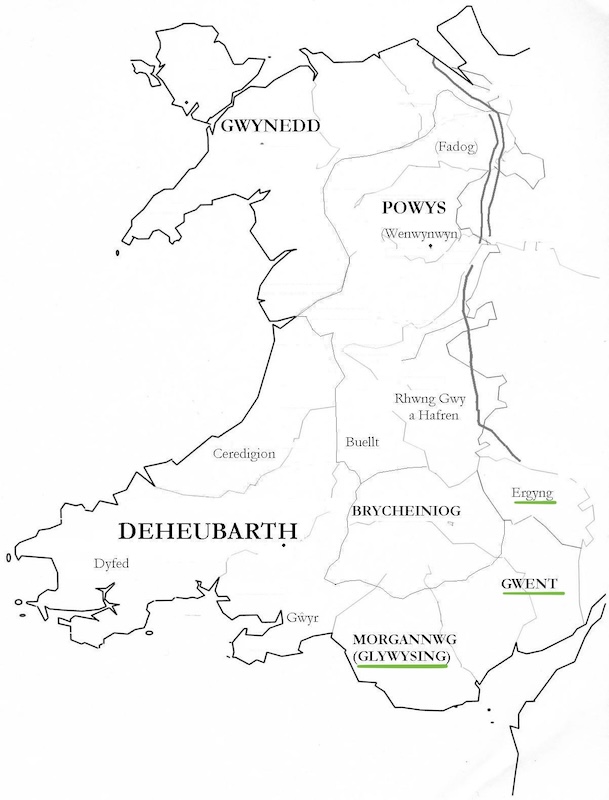
The kingdoms of Morgannwg, Gwent and Glywysing included land as far west as the River Loughor (or possibly the River Neath, which would link back to Mary Evans of Neath), and also encompassed land beyond the River Wye into the old Kingdom of Ergyng, south Herefordshire.

Though scholars agree that the name Athrwys comes from the archaic Old Welsh Antrēs, not Arthur; I feel use of the name “Arthur” for the legend could have evolved because of it’s similarity to Athrwys.
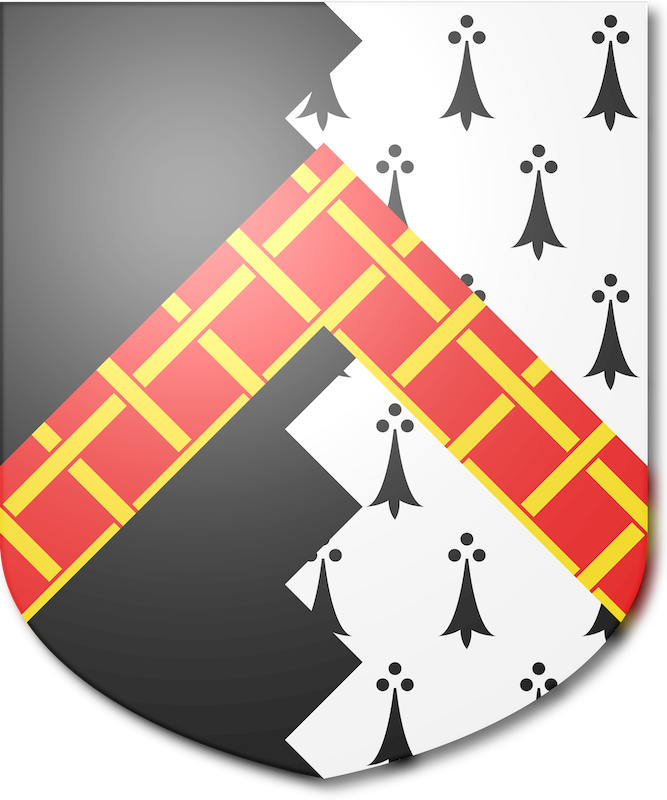
The Mackworth-Praeds have a very accessible family history. Composed mostly of lawyers, bankers, landowners and Members of Parliament (and my great-great-great-granduncle, the poet Winthrop Mackworth-Praed), there is a good public record, which can be traced back to Thomas Mackworth who, in 1404, received a grant of arms incorporating elements from the Audley and Touchet coat of arms in recognition of his (and his brother’s) valiant service to the Audley family; specifically at the Battle of Poitiers.

The link to Athrwys ap Meurig may not hold any real significance; after all, that far back everyone alive in 600 AD with a living descendant today is technically part of your ancestral tree. But perhaps it in part explains my attraction to the legends. At the very least, it gives me an excuse to write yet another Arthurian novel in the future, perhaps even one that centres around Athrwys ap Meurig himself.

Dragons, unicorns and ravens

12025840_10156059289970023_1877193848_o

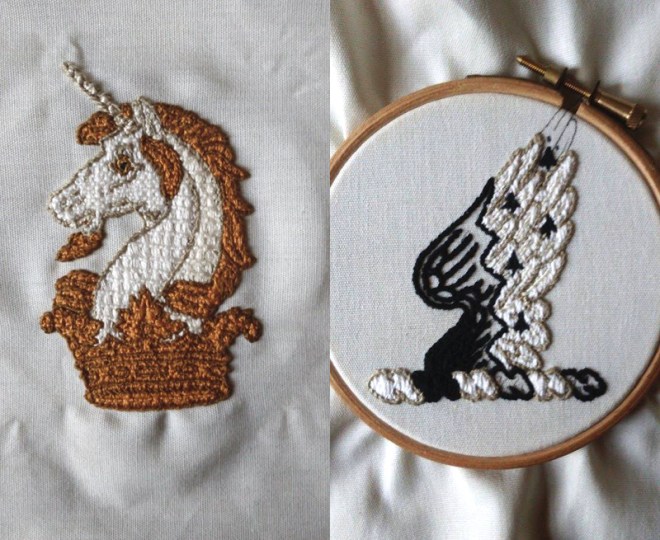
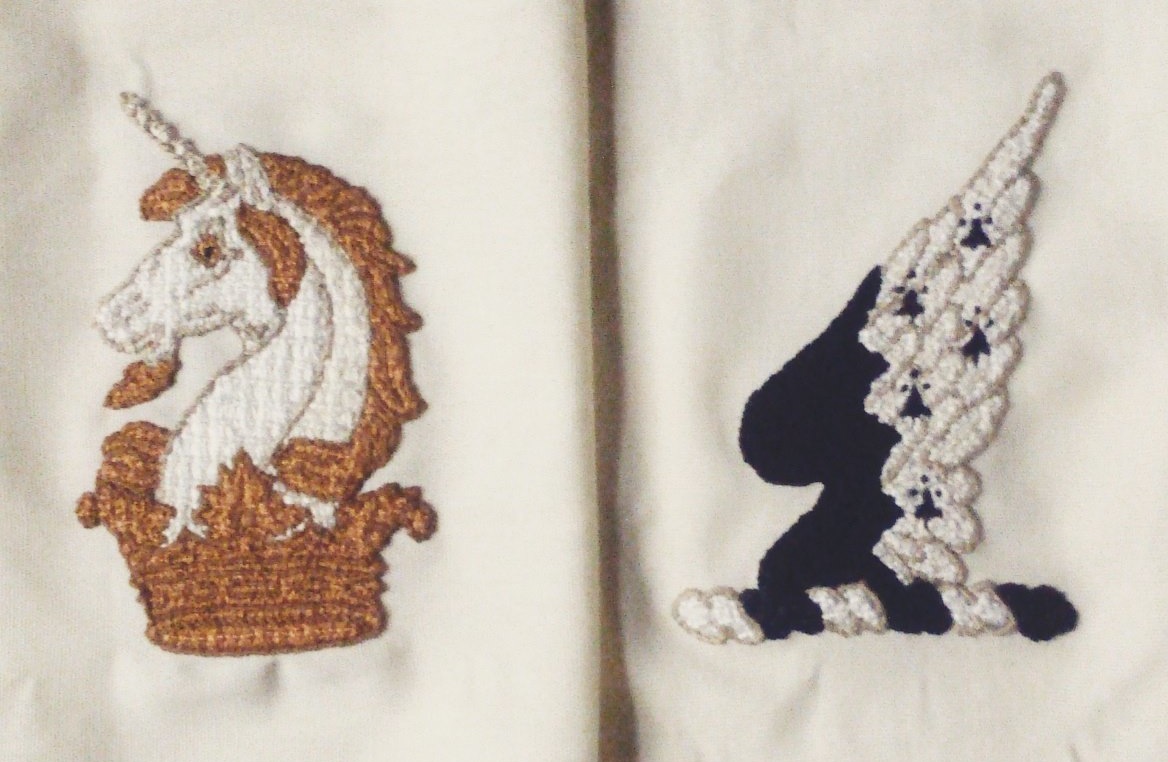
Finished! I have finished. Finally, my embroideries can sit side-by-side, ready for framing or for other kinds of presentation, looking smart and quite grand. Left, we have the Praed crest, a unicorn with crown; and right, we have the Mackworth crest, the raven’s wing and ermine. Traditionally, heraldry is interpreted right to left. Despite the stark colour difference between the two, I feel they go well together. This makes sense (as they are a considered pair), but I ensured that I used the same colours in my stitched interpretation wherever possible, whilst remaining true to the colour of the crests.

Usually it is the unicorn which is presented as the Mackworth-Praed sigil, as understandably, it is seen as the more prestigious of the two, but I am quite fond of the lesser-used raven’s wing, which seems to vary more due to liberal artistic interpretations. My interpretation is the more traditional presentation however, incorporating the pattern and colours also seen on the family’s coat of arms (which, by the way, will probably be my next craft related project).

As well as embroidering, this week I have been scanning slides taken in 1964 in Abisko, Sweden, by my grandfather. He was a keen conservationist and a great collector, collecting the moths and butterflies that he sought to conserve, and throughout his life he took many slides – around 22,000 of them. Some have come to me to digitalise, in the hopes that the National Trust may be interested in making use of them. It’s taken me four days to digitalise 200 slides – slides which (in these two boxes) consist of common to rare plants, reindeer hair, train stations and a dead lemming. These slides are all being stored on an external hard-drive, which I hope doesn’t crap out at one point or another because as of yet, I have no back up. Perhaps the thing to do would be to post up a few of the more interesting finds as I stumble across them – there are some lovely photos. The ones that interest me most, of course, are the photos of my family, particularly because the house that my father, aunts and uncles grew up in is also the home that I grew up in, too.

Before I scan 50 slides a day, I have been working on the illustrations for my children’s picture book. I thought I would share some sketches below (also viewable on my Instagram account):

dragon2 dragon1

They are, as you can hopefully see, dragons! There are ten of them, and they are all doing the sorts of things that dragons would do in a children’s book. The plan is to sketch them all in their various positions and then compile them for the final drawings – this is my first attempt at a picture book, after all, so I’m still finding my feet. I usually only do separate studies of one or two subjects at a time, but I have, at least, got a strong sense of the style in mind.

Other than that I’m still waiting for news from my proof readers, and resigning myself to the fact that I will probably have to read my book (again) on paper to check (again) for mistakes. If I find any, you’ll probably hear about it here. Until then, or until the next part-time post!

Part-time post

By now you’ve probably sussed the title of this blog in that I’ve been absent for a couple of days. I’m not yet sure at which frequency I will ultimately end up posting at, but as long as it’s higher than zero I feel I will be doing well. I’ve been up to a lot in the past few days, though mostly it’s been the same thing, cutting my novel on paper.

As of yet I’ve no idea how many words I’ve lost, but the experience in itself has been surprising. How, after roughly five re-writes and several more proof-reads are there still errors? Not many, granted, but one missed missing word can be catastrophic enough if not caught – as can typos, punctuation errors – and even worse: whole scenes that just don’t fit with the rest of the narrative.

It’s easy to end up with a scene that doesn’t work, particularly when said scene was written afterwards and inserted in the hopes it would further develop a character. The scene in question continues something that has already been resolved, yet expands the issues raised and gives a good relationship boost to the two main protagonists. As a result it must either be cut or re-written (we’ll see how the word count goes). Three people missed it when reading through it, though one reader said they were just too caught up in the storyline to even notice the discrepancy. I suppose that’s why people hire editors.

And so begins the three-day process (hopefully!) of trawling through my corrections in Word. Each revision always risks new mistakes, much like some sort of wordy vicious cycle, but then I suppose that’s why people hire proof-readers, too. Not something that’s doable without a substantial budget, so I’ll have to make do.

In other news I have been embroidering a bit this week, my family crest for the name Mackworth (a raven’s wing with ermine, see below). This goes with the unicorn head for Praed, though often it’s only the unicorn head which is depicted for both. Heraldry is another one of my interests, and I look forward to seeing these two finished and framed next to one another.

Crests for Mackworth-Praed, embroidered by M. L. Mackworth-Praed, 2015.
Crests for Mackworth-Praed, embroidered by M. L. Mackworth-Praed, 2015. Embroidered with two stitch types: stem stitch and couching, the stitch types used for the Bayeux Tapestry.

That’s all for now, it’s time to steam through this edit. Hopefully afterwards I’ll have a more realistic page count and can finish formatting and start uploading to Amazon. I will keep you updated on any progress. Until the next part-time post!