Blurb for The Future King: Logres

So! After blood, sweat and tears (not literally) I have finally completed my blurb for the back of my book jacket. Could I have a drumroll, please?

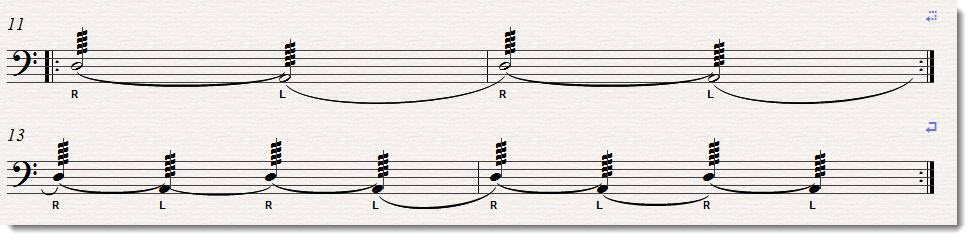
(Courtesy of http://freepercussionlessons.com/how-to-play-legato-drum-rolls-on-timpani/)

Here it is, my blurb for The Future King: Logres!

Britain, 2052. In a world of war, disease and hunger the UK stands alone as a beacon of prosperity under an all-powerful ruling party. Life at new school Logres seems promising for fifteen-year-old Gwenhwyfar, and quickly she falls for the school’s handsome catch, Arthur. When Arthur’s rival, Lancelot, returns after a suspension, her heart is immediately divided. Realising that behind the UK’s prosperity lies unspeakable cruelty, Gwenhwyfar sets off on a path to dismantle everything the government stands for. Suspenseful, raw and awash in a dystopian setting, The Future King: Logres is a story of identity and discovery against this backdrop, the second coming of the Arthurian legends.

The main thing is that it fits on my book jacket, right? Less is more, seems to be the resounding advice that I’ve collected from looking at various ‘how to’ sites. If anyone has any thoughts, please do share them. Meanwhile, whilst I’m waiting to hear back from my proof reader, I’m finishing off another project (a children’s book), which I’m hoping to release before Christmas. I won’t give away too many details just yet, but I’ve outlined the approach for the illustrations, and will hopefully be completing them (and posting updates) in the next few weeks. Exciting! (Well, it is for me.)

Progress on self-publishing!

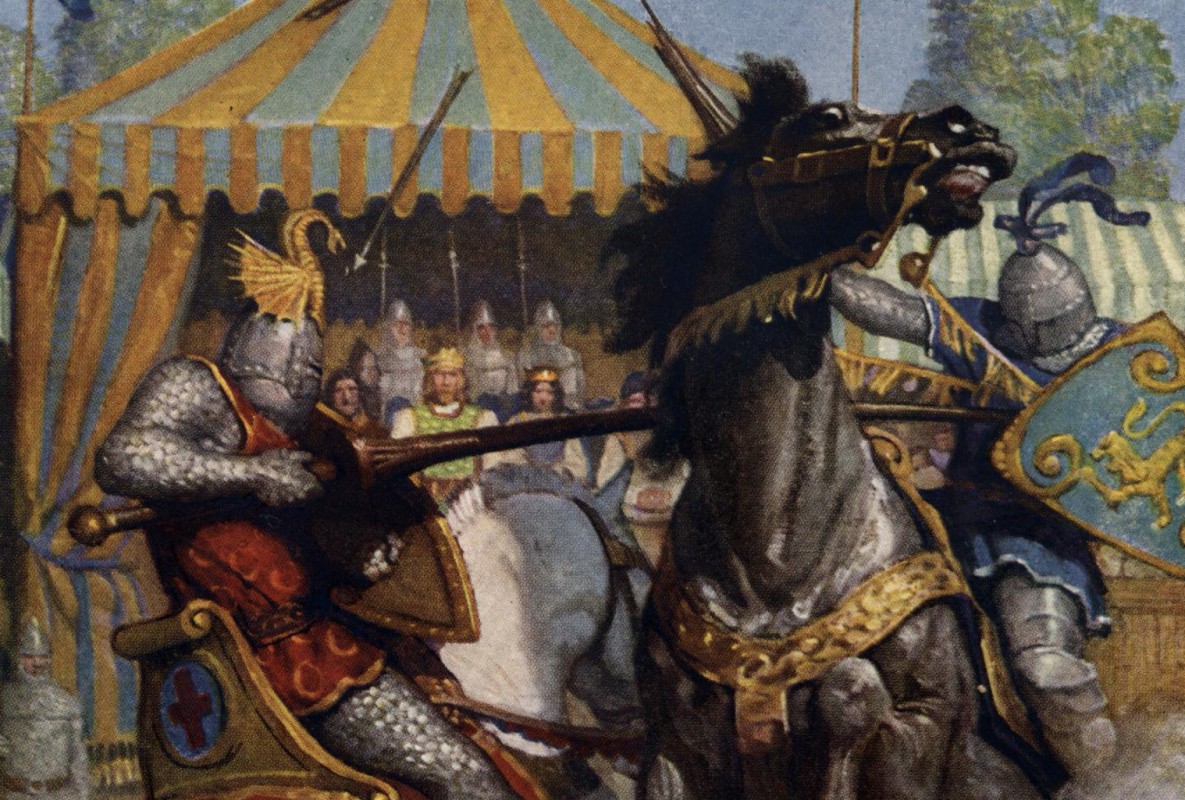
sir-mador-s-spear-brake-all-to-pieces-but-the-other-s-spear-held

So! Yesterday (was it yesterday? Actually, I think it was Friday), I finished my edit/proof read of my novel. That’s right! All five-hundred and something pages checked, double-checked, and tweaked. Surprisingly the new format of the novel made catching things that I’d never noticed before much easier – such as missing speech marks, duplicated words, or words that had clearly hung on despite the rewriting of the sentence. Inevitably, I will have missed one or two things. My three-pronged approach of reading in my head, reading aloud, or getting dictation & speech to read for me can’t have picked up everything. As a result I have sent my final draft off to my proof-readers, and am awaiting their verdict. I shall have to resist the urge to edit again when comments come back – after all this is the start of a story, and there are always so many ways to tell it.

In the meantime I am trying to work my way through the minefield that is writing your own blurb. I should be able to manage it, I’ve written a novel, right? I edited that novel, then after that I did the unthinkable – I trimmed down 120,000 words into a one-page synopsis. That, at the time, seemed impossible – but as it is often shown, the impossible turned out to be possible after all. 200 words or less is a much shorter order to work to, however, and (so far) I’ve found it’s the sort of thing that can only be approached in short bursts.

One draft – a splurge of sentences on the page that make little sense. Break. Another draft, writing an alternative to the above. Research, lots of research – or at least just a little bit – looking at book blurbs in your own library and googling ‘how to write a book blurb’, only to find that there are several ways one can do it. Writing again, with these strict guidelines in mind. Deleting all the above because, surprisingly, the guidelines were actually quite helpful. Break, because what you wrote needs to sink in before you can edit it. But you’re there, you’ve got the tone and the content right. Now it just needs to… pop.

Other than that, my schedule at the moment includes getting other aspects right – in particular things like text for the acknowledgements. As I am destined to a reasonable wait before I can continue with the whole publishing thing (everything is on hold now until the book itself is ready to be uploaded), I will probably return to some of the other points on my to-do list for a while. Scanning my grandfathers’ slides of plants and butterflies is one, illustrating a few projects is another, working on a children’s book is my third (nearly done, I just need a decent ending). Presently I am battling the urge to try restructuring my book completely, just to see if it would be better (or worse). Knowing when to stop tweaking is a good skill, and it’s easier to do when working on a painting or drawing. The result of a drawing is usually completely visible on one page, and is therefore easier to conclude that it is, actually, finished. Perhaps someday I will be able to transfer such understanding to my written work, and the whole process may become a little easier to draw a line under.
10 things I have learned whilst formatting a book in MS Word

  1. Apparently, if you’re going to be making changes to your book after formatting, MS Word is your best choice as it’s easier to edit content. That, and InDesign is just scary if you don’t know how to use it at all, really – so what hope would one have when it comes to formatting a whole novel?
  2. You’ll probably start with a font size which will make your book seem shorter. But then you’ll change the page size, line spacing and margins, and suddenly your book will seem longer. Much longer. Not good if you’re self publishing and more pages=less profit.
  3. It is surprising how bookish your book will look with only the things mentioned in (2) formatted. Because yes, surprisingly, there is more. Once you do get to the ‘more’ part, MS Word will start to seem like a living, thinking thing that does illogical things just to annoy you. This sense of working with a living, thinking thing will not deter you from insulting it frequently with all kinds of profanities, however, and you will feel no guilt in doing so.
  4. If you’re a first time self-publisher and have no experience in publishing, well, anything, you’ll inevitably have to refer to other (more traditionally published) novels to figure out what yours should look like. This is useful, and you should do it. Pick one book you like the look of and use it as a point of reference. Preferably something from your genre. After all, you don’t want your crime-thriller looking like erotic fiction (though if it’s all about tension anyway, what’s really the difference?).
  5. Referring back to point (3). You will format, you will think you are done, and then you will notice something that isn’t as it should be. For example, paragraphs breaking on the next page, thus giving you uneven line-to-page frequency. (Tip: if you have this problem, uncheck window/orphan control in format/paragraph for the whole document to fill your pages completely with lots of lovely prose). There will be other things, but at least you will feel accomplished when you fix them.
  6. Even if you do the above and check off window/orphan control, if you have inserted chapter dividers that look fancy, this will knock off your layout on your lovely new-chapter pages. Still trying to figure out how to fix that one without simply changing the font size of the empty line above said fancy chapter dividers (because, somehow, that seems crude).
  7. Headers and footers are important – format them well! Choose ‘different odd/even pages’ and make sure you mirror your margins through format/document. This does something else to make it look more bookish. From looking at various books I have determined that authors usually have their name on the even page and the title of the book on the odd page.
  8. Inserting Section Breaks is an absolute nightmare. Seriously, first you figure out that you’re supposed to inset a Section Break relative to whether it’s an odd page or an even page, then you figure out how to get the page numbers to start at ‘1’ on the fourth actual page, and then you realise through exporting to PDF that each new Section Break has skipped a page number and thus created a ‘phantom page’ with nothing on it before every chapter in your document. Huzzah.
  9. Confident in all the abilities you have learned (as listed above), you calmly go through the document to rectify the problem, only to have one Section Break change reset all the others into a paradoxical chaos of wrong numbers and jumps and gaps where your book is suddenly longer or shorter than it actually is (but not really, hence the number-paradox).
  10. You fix the above (9) without screwing everything else up. But you’re still editing or there’s a few things left to change. You now wish you had finished the final draft before even attempting formatting, because you’re terrified the slightest change might destroy everything you’ve worked so hard to achieve. Who knows? Maybe a paragraph more or less will confuse everything and you’ll be stuck undoing everything you’ve done in order to redo it properly. Let’s hope not.

The Future King: Logres – book cover release!

TFKBookCoverMLMP2015
The Future King: Logres is due to be released in October of this year. Keep checking back for teasers and confirmation of a release date.

So today I am finally ready to post up the above design. This is my novel, this is my my book cover: this is what it looks like. It’s simple, it’s clean, and it’s a great start to the look and feel of the rest of the series.

The name of the series, The Future King, is born from the promise of King Arthur’s messianic return to save the country despite his downfall at the end of the original legends. Logres is the scene in which this second coming is set: the secondary school at which fifteen-year-old Gwenhwyfar Taliesin starts after moving from Swansea with her affluent parents. It is 2052, and the gap between rich and poor has never been wider. Immigrants are persecuted and dubbed ‘illegals’ while day-to-day life is becoming increasingly monitored: just another year under George Milton and his ruling party, New National.

Things are going well for the release of The Future King: Logres – the book has been fully formatted and I am just perfecting my final draft. It will then be sent off to my proof-readers (very kind friends and family who don’t mind checking for errors). I’m greatly looking forward to seeing Logres printed and in final book format – my full book design is waiting patiently in photoshop as a psd file for my confirmed spine width. Then I just need to write a blurb.

Feel free to let me know what you think of the chosen design if you’d like to leave a comment. It’s back to editing, here, but keep checking back for more news, updates and teasers in the weeks to come!